
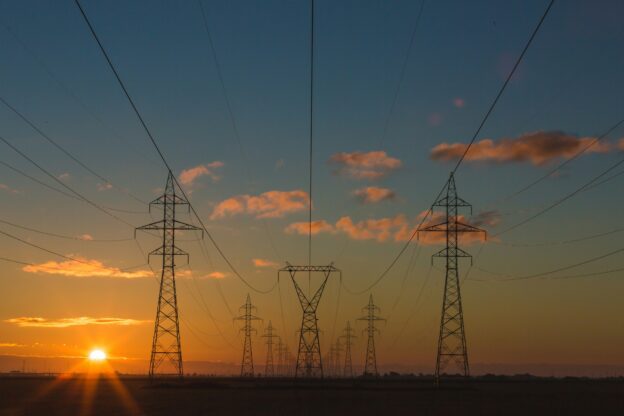
In his first address to Labour Party Conference as prime minister, Andy Burnham set out plans for a new government-backed body, Great British Grid (GBG), as part of a wider effort to address high energy costs, accelerate infrastructure delivery and support economic growth.
For investors and businesses, the government’s plans for GBG are unlikely to represent a fundamental change to the ownership or operation of Britain’s electricity network. The Department for Energy Security and Net Zero has said that GBG will ‘complement, rather than replace’ the companies already responsible for operating the electricity system, with the role of existing network operators remaining unchanged. Instead, the focus is on changing how future transmission infrastructure projects are developed and delivered.
GBG will operate as a branch of Great British Energy (GBE) and will participate in bids for future transmission projects. Rather than incumbent network operators automatically developing new infrastructure, projects could be awarded through a competitive process involving bids from GBG, existing network companies and private investors. The government argues that increasing competition in this way will help speed up grid expansion, support economic growth and reduce the costs of network investment that are ultimately passed on to consumers through energy bills.
The scale of GBG’s involvement will depend on the funding available to it. GBE was allocated £8.3 billion of capital funding for this parliament, although a proportion of that funding has already been committed to other priorities, including support for small modular nuclear reactors. While the final allocation to GBG has yet to be confirmed, it is likely to be small compared with the scale of investment required across the electricity network. Planned transmission investment during the 2026-31 regulatory period alone is expected to total around £70 billion, with substantial further investment required throughout the 2030s.
The use of competition to deliver transmission infrastructure is not entirely new. The Competitively Appointed Transmission Owner (CATO) regime, introduced under the Conservative government in 2023, was designed to open parts of the transmission network to competitive procurement. GBG therefore builds on an existing framework for competition, while giving the state a more direct role in bidding for future transmission projects.
The government has also announced reforms that would allow businesses to construct their own grid connections rather than waiting for network operators to undertake the work. Ministers hope this approach will accelerate the delivery of energy projects, industrial developments and AI data centres in the UK.
While these reforms may help reduce some delays, many industry groups continue to argue that the planning and consenting system remains one of the biggest barriers to faster infrastructure delivery. The success of the government’s approach is therefore likely to depend not only on changes to grid connections, but also on whether wider planning reforms can shorten approval times for major energy projects.
Please contact Brett Morton via brett.morton@gkstrategy.com if you would like to discuss the government’s energy reforms in more detail.