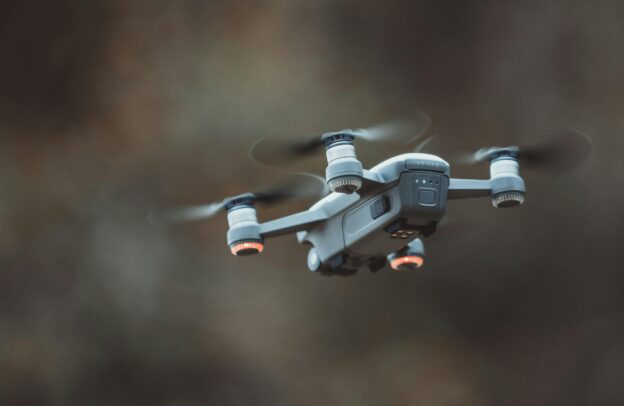
The government has set itself the ambitious goal for becoming the fastest growing economy in the G7. This lofty ambition sits at the heart of the government’s agenda and is central to its industrial strategy – a 10-year plan to increase business investment in the industries of the future. The drones sector has been identified as a frontier industry, with the government clearing a flightpath for the UK to be a world leader in drone innovation and technologies.
Driving this move is the extraordinary economic potential of drones. A recent PwC report states that the sector could contribute £45 billion to the UK economy and support 650,000 jobs by 2030. Further analysis undertaken by Frazer-Nash consultancy for the government suggests that with public support and a shared strategy and ambition between government and industry, the sector could have contributed £103 billion by 2050. Together, these findings demonstrate how collaboration between government and industry can lead to a thriving drones sector which can drive growth and innovation across the UK.
Regulatory challenges
For this growth to be unlocked, the government must work to address regulatory challenges that constrain innovation. Across government, companies face a range of overlapping rules that can slow commercial deployment and limit investment. One of the largest constraints on the sector is the requirement to keep the drone within the line of sight of the operator. Additional health and safety regulations enforced by the Civil Aviation Authority (CAA) also prohibit drones being flown within a 50m radius of people. This constrains the range of operations drones can perform, limiting their use in many areas such as delivery, infrastructure inspection, and large-scale surveying, particularly in urban areas.
The Health and Safety Executive (HSE) also limits the growth of drones operating in the agricultural sector, with the HSE requiring companies to get approval for almost all aerial spraying. The HSE states that there is a 52-week processing time for drone applications, which will inevitably undermine the innovation and adoption of drones in the agricultural sector.
All these affected areas are where drone technology offers incredible commercial potential, so overcoming these regulatory barriers will be key for businesses looking to unlock growth in the drones sector.
These challenges are not insurmountable and government and industry collaboration is already underway to tackle them. The Regulatory Innovation Office (RIO) is leading a series of pro-innovation reforms for the drones sector, including the introduction of a single, standard risk assessment process to cut approval times for complex drone operations. They are also working on expanding the CAA’s atypical air environment policy, which enables the use of drones Beyond Visual Line of Sight (BVLOS), with the ROI providing £8.9 million in funding for innovative projects that will test the effects of new BVLOS standards. The ROI has also worked with the HSE to make it legal for drones to spray slug pellets, which is a major step forward for agricultural drones businesses.
Public concerns
Drones businesses also face challenges of public perception. The research done by Frazer-Nash consultancy estimated that without public support, the size of the sector will be £65 billion by 2050. That represents a £38 billion reduction in the sector compared to the scenario with public support. Given the incredible economic value that lies in public support, addressing public concerns, such as the use of drones for criminal activities, are of great importance to the sector and government to ensure businesses reach their full potential.
The government is already thinking about innovative solutions to the public perception challenge. In November 2025, the government launched a technology challenge which will encourage industry to develop innovative systems capable of detecting drones designed by criminals to evade current detection methods. If successful, this challenge will help the government intercept drugs being delivered by drones into prisons.
The government’s willingness to cut red tape and find innovative solutions to the challenges facing the sector creates opportunity for the sector. However, it remains essential for companies to engage with the government, both to push further on reducing overly prohibitive regulation and to address public concerns surrounding drone safety. By doing so, businesses can play a central role in shaping a regulatory landscape that supports innovation, builds public trust, and cements the UK’s position as a global leader in drone technology.
If you’d like to discuss drones and the wider political landscape in more detail, please reach out to Jacob on Jacob.walsh@gkstrategy.com