Tag Archives: environment

What impact will data centres have on the UK’s ability to meet its net zero ambitions?

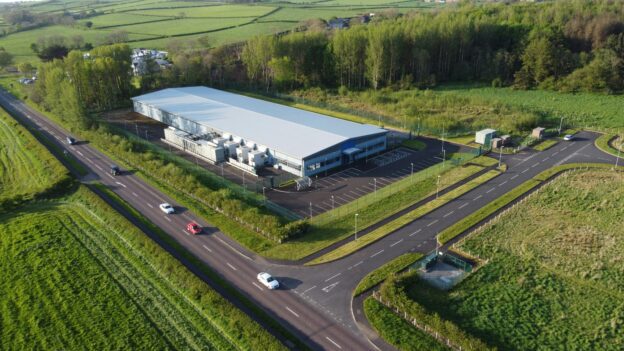
Data centres have been subject to significant scrutiny in recent years, particularly in relation to their impact on the government’s net zero agenda. In correspondence sent to the cross-party Environmental Audit Committee on 20 February 2026, the Secretary of State for Energy, Security and Net Zero Ed Miliband admitted that energy future demand from data centres, and its interaction with the UK’s net zero ambitions, remains ‘inherently uncertain’.

The government has designated data centres as ‘critical national infrastructure’ given they support nearly all economic activities as well as the day-to-day running of public services. Forecasts undertaken by trade association TechUK suggest that data centres have the potential to contribute an additional £44 billion to the UK economy by 2035, highlighting their strategic importance to the government’s economic growth agenda. The government recognises the important role data centres will play in our economy, evidenced through its commitment to deliver nearly 100 new centres over the next five years. Nonetheless, this has led to environmental groups seeking clarity from the government on how it will deliver this ambition while meeting its environmental obligations.

Under plans to expand the number of data centres, policy challenges have been raised by the wider energy sector and industry bodies, particularly around their use of energy and water. In March 2022, the National Grid Electricity System Operator (ESO) estimated that data centres consume around 2.5% of the UK’s electricity. It is likely that data centres’ electricity consumption will increase significantly over the coming years. Forecasts published by Oxford Economics in December 2025 estimate that data centres’ demand will represent 30.4% of UK’s commercial electricity consumption by 2030.

Alongside rising demand for electricity to power data centres, there is widespread debate about their impact on the water sector. In a report published by the government’s Digital Sustainability Alliance’s (GDSA) in September 2025, global water usage is predicted to increase from 1.1bn cubic metres to 6.6bn cubic metres by 2027. There is limited data available on how much water data centres use given there is currently no obligation for centres to report their water consumption. It is unsurprising therefore, that there are a range of opinions around this issue. While trade associations like TechUK challenge the notion that data centres are ‘inherently water intensive’, non-profit organisations such as Global Action Plan, have criticised the sector’s lack of transparency.

Despite the uncertainty of the sector’s capacity to support the government’s net zero ambitions, there is appetite, particularly from parliamentarians, to better understand the environmental impact of data centres. Last month, the Environmental Audit Committee launched its own inquiry into the risks and opportunities of data centres in the UK, with the committee inviting submissions from interested parties until 6 April 2026. Parliamentarians have also launched a new All-Party Parliamentary Group  to examine the impact of data centres on economic growth and the UK’s net zero ambitions.

As an essential infrastructure for digital storage and the wider economy, there is potential for data centres to help facilitate rapid economic growth for the UK. While data centres are starting to come under scrutiny from parliamentarians regarding their impact on the environment, there is scope for the sector to engage with government which will be very much in listening mode. The government acknowledges the value of data centres but in order for businesses operating in this sector to succeed, the sector will need to challenge the notion that it will constrain the government’s environmental agenda.

If you would like to discuss the impact of data centres and the government’s net zero agenda in more detail, please reach out to Noureen Ahmed at Noureen@gkstrategy.com.
The Green Deal Industrial Plan, the Inflation Reduction Act, and what they mean for the UK

GK consultant Milo Boyd takes a look at the significance of both the EU’s Green Industrial Plan and the USA’s Inflation Reduction Act, and assesses what these mean for the UK’s climate competitiveness. 

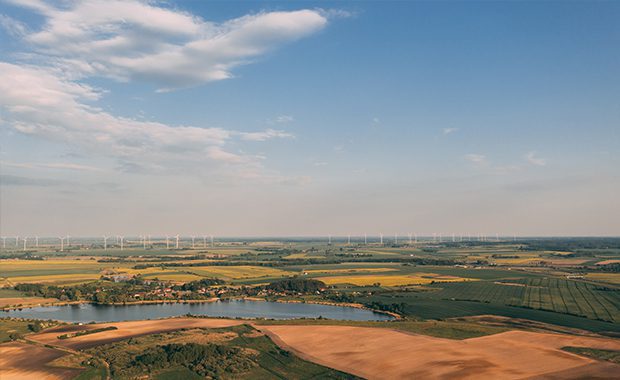
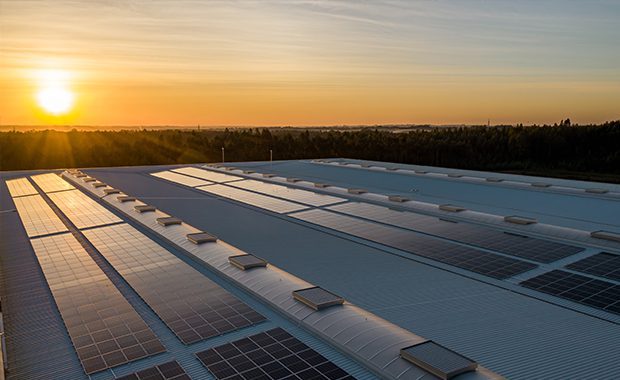
It’s no secret that the Inflation Reduction Act (IRA) has been framed by the incumbent Democrat administration in the United States as one of their big successes (or failures, depending on who you ask). To make it this far, the Act has battled internal Democrat opposition, as well as big-spending averse, influential Republicans who have sought to rein in spending commitments from central government. Despite this, the IRA has put the US on a path to meet its Nationally Determined Contribution (NDC) as set out in the 2016 Paris Agreement and achieve a 50-52% reduction in its carbon emissions by 2030. Of importance to European nations, the Act also contains provisions to benefit US domestic industries. Fearful of the influence that the IRA could wield over the clean tech and net-zero sectors, the European Commission has recently published its own strategy to avoid European industry marching into the welcoming arms of the US – the Green Deal Industrial Plan.

The net-zero transition, the acceleration of which has been stimulated by the ongoing energy crisis due to the conflict in Ukraine, has resulted in considerable shifts in economic, industrial and geopolitical planning throughout both the UK and the EU. With the release of the Green Industrial Plan, the EU has made clear its intentions as to how it aims to take advantage of the accelerated transition to net-zero and strengthen its industrial footing. Fronted by the EU Commission President Ursula von der Leyen, the Plan confirms that the EU will propose a Net Zero Industry Act, which promises to provide a regulatory framework to enhance the competitiveness of the EU’s low-carbon and net-zero industries, including the provision of tax-breaks for companies that support those ambitions.

The plan aims to build on ongoing initiatives, such as REPowerEU – released in May 2022 – and at its centre provides a more predictable and streamlined regulatory environment for clean teach by loosening the limits on subsidies provided by EU member governments to struggling businesses. The hope by the EU is that this will help ensure that Member States are able to provide more ‘state aid’ to prop up businesses that are lagging behind. The Plan has received mixed responses in EU circles, with some figures going as far as describing the plan as ‘Marx on steroids’, amid fears that the stronger EU economies will be able to spend their way to internal economic dominance, and subsequently influence. As described by Von der Leyen, “the next decades will see the greatest industrial transformation of our times”, clearly setting out how the EU views the scale of the opportunity. Evidently, both the Green Deal Industrial Plan and the Inflation Reduction Act will be cornerstones of decision-making on both sides of the Atlantic, with clear transparent efforts to tempt businesses to invest and take root in each respective economy.

So what do both of these plans mean for the United Kingdom? The UK cannot afford to lag behind and lose out to international big hitters, especially now that green industries are understood to be critically important to the UK economy. Lacking the pure economic firepower of both the EU and the US, it is vital that the UK remains agile enough – Brexit benefit anyone? – to spot opportunities as they emerge and quickly take advantage of them, optimising its regulatory and planning landscape to do so. Restrictive planning policies and a 13-year backlog of grid connections for renewable projects have been the Achilles heel of the UK economy throughout the 2010’s, and to date remain overly drawn out and cumbersome, rightly being identified by the Skidmore Review as some of the UK’s biggest weaknesses. Despite generally performing quite well on low-carbon energy, the UK should prioritise speeding up the planning and consent processes to ensure a steady stream of new green projects in the pipeline. Doing so would encourage external investment into the UK economy and secure the continuation of the UK’s position as a global climate leader.

GK Strategy are experts at helping companies navigate the UK’s changing policy landscape, get in touch with milo@gkstrategy.com for more information.

GK Insight: What does the Liz Truss premiership mean for the UK’s net zero agenda?

GK consultants Sam Tankard and Milo Boyd assess the potential ramifications of a Liz Truss government for the UK’s net zero commitments, and what conclusions can be drawn from the ministers appointed at the Department for Business, Energy and Industrial Strategy. Take a look at the analysis here: What does the Liz Truss premiership mean for the UK’s net zero agenda?