
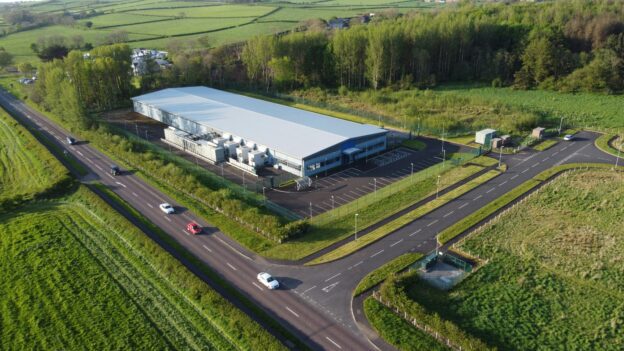
Data centres have been subject to significant scrutiny in recent years, particularly in relation to their impact on the government’s net zero agenda. In correspondence sent to the cross-party Environmental Audit Committee on 20 February 2026, the Secretary of State for Energy, Security and Net Zero Ed Miliband admitted that energy future demand from data centres, and its interaction with the UK’s net zero ambitions, remains ‘inherently uncertain’.
The government has designated data centres as ‘critical national infrastructure’ given they support nearly all economic activities as well as the day-to-day running of public services. Forecasts undertaken by trade association TechUK suggest that data centres have the potential to contribute an additional £44 billion to the UK economy by 2035, highlighting their strategic importance to the government’s economic growth agenda. The government recognises the important role data centres will play in our economy, evidenced through its commitment to deliver nearly 100 new centres over the next five years. Nonetheless, this has led to environmental groups seeking clarity from the government on how it will deliver this ambition while meeting its environmental obligations.
Under plans to expand the number of data centres, policy challenges have been raised by the wider energy sector and industry bodies, particularly around their use of energy and water. In March 2022, the National Grid Electricity System Operator (ESO) estimated that data centres consume around 2.5% of the UK’s electricity. It is likely that data centres’ electricity consumption will increase significantly over the coming years. Forecasts published by Oxford Economics in December 2025 estimate that data centres’ demand will represent 30.4% of UK’s commercial electricity consumption by 2030.
Alongside rising demand for electricity to power data centres, there is widespread debate about their impact on the water sector. In a report published by the government’s Digital Sustainability Alliance’s (GDSA) in September 2025, global water usage is predicted to increase from 1.1bn cubic metres to 6.6bn cubic metres by 2027. There is limited data available on how much water data centres use given there is currently no obligation for centres to report their water consumption. It is unsurprising therefore, that there are a range of opinions around this issue. While trade associations like TechUK challenge the notion that data centres are ‘inherently water intensive’, non-profit organisations such as Global Action Plan, have criticised the sector’s lack of transparency.
Despite the uncertainty of the sector’s capacity to support the government’s net zero ambitions, there is appetite, particularly from parliamentarians, to better understand the environmental impact of data centres. Last month, the Environmental Audit Committee launched its own inquiry into the risks and opportunities of data centres in the UK, with the committee inviting submissions from interested parties until 6 April 2026. Parliamentarians have also launched a new All-Party Parliamentary Group to examine the impact of data centres on economic growth and the UK’s net zero ambitions.
As an essential infrastructure for digital storage and the wider economy, there is potential for data centres to help facilitate rapid economic growth for the UK. While data centres are starting to come under scrutiny from parliamentarians regarding their impact on the environment, there is scope for the sector to engage with government which will be very much in listening mode. The government acknowledges the value of data centres but in order for businesses operating in this sector to succeed, the sector will need to challenge the notion that it will constrain the government’s environmental agenda.
If you would like to discuss the impact of data centres and the government’s net zero agenda in more detail, please reach out to Noureen Ahmed at Noureen@gkstrategy.com.