Tag Archives: investment

The £0.5bn revenue raiser, incurring the wrath of farmers

GK Senior Adviser James Allan visited the farmers protest in Westminster and assesses the likelihood of a government u-turn and its agriculture policy plans.

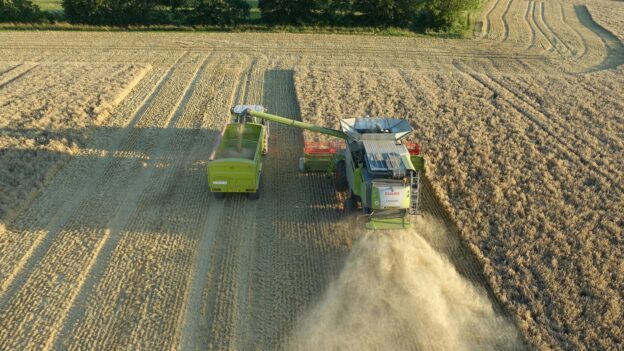
On 19 November, farmers were out in force and took to the streets of Westminster for a heartfelt protest for a sector that feeds the nation. At the autumn budget, the Chancellor Rachel Reeves introduced a cap of £1m for assets eligible for Agriculture Property Relief and Business Property Relief. Estimated to raise £0.5bn a year by 2029/30 for spending on public services, the measure has been dubbed a ‘family farm tax’ for farmers that “don’t do it for the money because there is none”.

The extent to which the Chancellor’s action equates to a “death knell” for the family run farm is somewhat contested. While the Country Land and Business Association estimates 70,000 farms will be impacted by the change, various policy wonks and tax specialists argue that this does not consider other reliefs and is based on the quantity of farms, rather than ownership structures. Disputed figures aside, it risks fueling a shift public opinion against the government and one of the shortest-lived honeymoon periods for a new Prime Minster. A survey carried out by JL Partners found that 53% of respondents felt the autumn budget was unsuccessful, so the farming community are not alone.

Is this Reeves’ Cornish pasty tax moment?

When then-Conservative Chancellor George Osborne introduced a 20% tax on hot foods to end VAT anomalies in 2012, few anticipated the political drama of “pastygate” which ensued. The Conservative government was criticised for being out of touch, with some commentators even alleging class war. Then Prime Minister David Cameron was caught out for saying he’d eaten a pasty in Leeds Railway Station when the West Cornwall Pasty Company duly noted that the pasty outlet had closed two years previous. The controversy detracted from Osborne’s budget and ultimately led to a government u-turn and a negative with 49% of people describing the government’s handling of pastygate as a “shambles”. In a similar vein, the political fallout from this protest will be difficult for the Labour government to manage. Whatever Reeves’ next move, pastygate demonstrates that u-turns are not unprecedented when public opinion moves against a pinch point policy issue.

Beyond the political drama

Politics aside, the protests cut to the core of several interrelating policy issues, chief among them food security. Should farmers up the stakes and choose to strike, the government has already confirmed contingency plans to mitigate against likely food shortages. Any disruption to already fragile “just in time” food supply chains, which are a hallmark of the British supermarket industry, would have an immediate knock-on effect for the consumer, and in turn, the voter. This year of global elections has demonstrated that voters do not reward incumbents when food prices rise.

Yet given the 60/40 split of domestic and imported food produce respectively, the issue of food security is both desperately domestic and international. Russia’s invasion of Ukraine not only led to record levels of food inflation, hitting low-income households the hardest, but also a decline in business investment in the UK food and drink sector. Then there’s the issue of climate change. While India and Pakistan account for roughly 46% of UK rice imports, the government acknowledges that India is increasingly a climate vulnerable country. In short, a greater dependence on food imports arising from a possible collapse of domestic farming exposes the UK to yet more unpredictable geo-political and climate risks.

The British farming sector does not operate in isolation; it is critical to the UK’s broader rural economy, supporting industries such as agricultural machinery, agri-tech and innovation, and food processing. More than this, farmers are custodians of the UK countryside, contributing to environmental goals of biodiversity, carbon sequestration and sustainable land management and forestry. Though contentious, the Chancellor’s action prompts a broader conversation about agricultural reforms which align with national priorities and ensures the voice of the farming community is heard. The government has yet to set out substantive details but spoke of a new deal for farmers during the election campaign. Now in government, Defra Secretary Steve Reed has signalled a focus on trade deals undercutting low welfare and low standards; maximising public sector purchasing power to back British produce; and a land-use framework to balance nature recovery and long-term food security.

Whether Reeves doubles down or pivots on the Agriculture Property Relief depends on the government’s willingness to expend political capital to defend its decision. Labour’s instinct will be to fight on but the party finds itself on new ground. Its broad but narrow majority is part contingent on non-traditional Labour voters, many of them in rural areas. The MPs in these constituencies will have their eyes on a 2029 general election. Maintaining the rural vote and positioning Labour as the party of both rural and urban communities will be a challenge for the government. How Starmer and Reeves handle the ‘family farm tax’ could well define this iteration of the Labour Party. For investors and businesses alike, keeping abreast of these political battlegrounds, and preparing for the associated commercial risks and opportunities, will be important in making the case to a government that might well bend to a shift in public opinion.

Labour’s new era for agriculture: Can political stability drive agri-tech innovation?

GK Senior Adviser James Allan analyses the government’s agriculture policy plans and the opportunities that could arise for investors.

With the Labour government now in power, some may wonder if the food, farming and agriculture sectors are about to see a major shift – a shift from being an important constituent of the then Conservative administration of 14 years to lower down the political list of priorities within Labour’s “mission led” government.

The Autumn Budget on 30 October will partly address this concern and end the speculation about potential changes to agriculture property relief and Defra’s agricultural budget. But with a Party of a different political hue now occupying the corridors of power, it’s worth considering whether Labour’s pro-growth messaging of “political stability” to attract private sector investment extends to the food, farming and agriculture (FFA) sectors, and if so, to what extent.

Why Labour must harvest more than just political stability

To attract private investment, ‘political stability’ alone is not sufficient – it needs to be backed up by policy substance and public investment, and with long-term strategic thinking. From aquaculture to viticulture, solar farms to biodiversity, food pricing and standards to foods high in fat, salt and sugar, there are many agendas and issues at play. These will all be playing out against a political backdrop with a renewed sense of momentum, a government with a greater willingness to intervene in the name of public health, an entire mission focused on decarbonisation, and a tight fiscal environment impacting the potential for significant public investment.

The first 100 days for the new government have proved that governing isn’t easy. Political pinch points and missteps aside, a common thread in the criticisms levelled against Labour ministers has been the absence of a defining vision for the sector to provide the framework for policy thinking and development; not least for food security which is set to become one of the defining political issues of the parliament. Without this overarching vision for the sector, the ability for businesses to plan their own investment and growth strategies becomes much more difficult and limits the ability of government to ‘crowd in’ private capital to drive growth.

The sowing of early seeds positive for UK investors

There are a few positive and recent developments of note. First, the Farming Minister, Daniel Zeichner, has confirmed the government’s intention to introduce secondary legislation which will bring to reality the regulatory regime of the Genetic Technology (Precision Breeding) Act 2023.[1] This will help to simplify the authorisation process for bringing new products to market from 1o years to an estimated 12 months.[2] Investors should note the government’s familiar caveat of “as soon as parliamentary time allows” which means the introduction of secondary legislation is unlikely to be imminent and will compete with an already packed legislative calendar. Speeding up routes to market will be welcomed by investors backing early-stage or growth-stage companies involved in gene editing, crop efficiency technologies, or those innovating in climate-resistant crop varieties. The streamlined regulatory environment lowers barriers, creating the potential for significant returns more quickly. Zeichner has also confirmed 43,000 Seasonal Worker visas for the horticulture sector and 2,000 for the poultry sector for 2025. Accompanied by a few additional measures to simplify free-range labelling requirements, this signals that the Defra ministerial team is actively listening to the sector and willing to flex policy to meet operational challenges and remove barriers to growth.[3]

Secondly, the government has secured access to the US market for British beetroot farmers, boosting export opportunities and attributed to the efforts of DEFRA’s agri-food attaché in the US.[4] This establishes an interesting precedent for securing market access outside of more formal and comprehensive free trade agreements, and creates attractive investment opportunities in companies that produce export-ready, high-quality British agricultural goods. Crucially, produce by produce access deals averts the political tightrope of negotiating comprehensive trade deals, not least one with the US which has long been the envy of previous Conservative Prime Ministers. For investors and argi-businesses on the lookout for export opportunities, engaging with DEFRA’s eleven attaches located in British embassies and consulates in Canada, Mexico, Brazil, Kenya, The Gulf, India, Japan, China, Thailand and Vietnam will be important to replicate this success.

Thirdly, there is recognition in government of the long and fraught dissatisfaction among farmers concerning the future viability of the agricultural sector.[5]  The Labour ministerial team perceives a lack of confidence among farmers as the rationale for needing to optimise Environmental Land Management schemes as part of a wider new deal for farmers. The precise details of this new deal have yet to be clarified but the government has signalled a focus on:

  • Trade deals undercutting low welfare and low standards
  • Maximising public sector purchasing power to back British produce
  • A land-use framework to balance nature recovery and long-term food security

A latter focus on food security will be important for investors seeking opportunities which align with Labour’s aim to make the UK more self-reliant in the food and energy sectors, but especially where technological innovation contributes to more efficient and resilient farming processes and produce. Defending their record in government and playing in safe political territory, this was a focus of a recent opposition day debate in Parliament where several Conservative MPs made the case for greater public investment in new farming technologies to safeguard the nation’s food supply.[6] However, as noted by DEFRA Secretary, Steve Reed, the government’s ability to do so is up for consideration in the upcoming Budget and next year’s Spending Review and therefore competes with other public spending priorities.

A wet start for the farming sector

This year’s harvest of the five key crops – wheat, winter and spring barley, oats and oilseed rape – saw a decrease of 15% compared to the 2023 harvest with an estimated loss of £600m in revenue for English farmers due to considerable wet weather.[7] The impact has extended beyond these core crops with a south Devonshire winemaker reporting a 70% decrease in expected volumes compared to 2023 and another winemaker noting heightened disease pressures due to constant rain. For the British viticulture industry, the wet weather year of 2024 follows a boom in capital investment and overseas wine producers buying into the UK as a hedge against climate change. Rural and farming communities might not be this government’s traditional supporter base but neglecting the sector – with its sub-sector growth gems like viticulture – risks undermining long-term food security and economic growth not just farmers but the broader economy and consumers alike.

[1] DEFRA, New legislation to support precision breeding and boost Britain’s food security (Sept-23 link)

[2] DEFRA, Impact Assessment – Impact Assessment – Genetic Technology (Precision Breeding) Bill (Mar-22 link)

[3] DEFRA, Government provides certainty to horticulture and poultry businesses  (Oct-24 link)

[4] DEFRA, British beetroot growers to put down roots in US market (Sept-24 link)

[5] DEFRA, Government to restore stability for farmers as confidence amongst sector low (Aug-24 link)

[6] House of Commons, Opposition day debate on farming and food security (Oct-24 link)

[7] Energy & Climate Intelligence Unit, England has second worst harvest on record with fears mounting for 2025 (Oct-24 link)

Image of the city

The GK Post-Election Breakfast Event

GK Strategy Adviser Rebecca McMahon reviews the GK Post-Election Breakfast Event. 

The coming weeks and months will see the new Labour government pressing ahead with its agenda for government, and getting to grips with a number of difficult challenges facing the UK, from sluggish growth, to growing NHS waiting lists, to precarious local authority finances.

GK Strategy was delighted to host a panel discussion this week looking at how the government will tackle some of these issues, and how it will prioritise its time and resources to deliver on its ambitious policy pledges. GK was joined by  former Minister and Health Select Committee Chair, Steve Brine, and Head of Research at Labour Together, Christabel Cooper, who shared their insights into the government’s approach, and some of the inevitable obstacles it will face in the coming months.

Both panelists agreed that while the list of public policy challenges inherited by Starmer and his team is by no means a short one, Labour ministers will now be deciding on areas where urgent action is most needed.

Reforming the UK’s planning system was identified as one of the priority areas for Starmer’s new administration. Our two panelists noted that the new Government’s ambition in this area has already been illustrated by repealing the de facto ban on onshore wind, re-introducing mandatory housing targets, and pledging to update the National Planning Policy Framework via consultation by the end of the Party’s first month in power.

As a policy area with implications for multiple sectors – including housebuilding, the green economy and major infrastructure– planning reform to unlock private investment will be at the core of the new Labour Government’s agenda. As Chancellor of the Exchequer Rachel Reeves set out in her first speech following her appointment, its ultimate success will rely on “unlocking private investment that we so desperately need”.

Healthcare and the future of the NHS was another policy area which featured prominently. Steve Brine pointed out that under current spending plans, funding for the health service is projected to rise at a lower rate than during the austerity years. Meanwhile, the NHS Workforce Plan continues to be underfunded and the outcome of the Health Secretary’s talks with the junior doctors uncertain. He noted that while the Government will soon have to make difficult spending decisions, there would be an emphasis on creating an investor-friendly NHS to support Labour’s ambitions to “crowd in” private investment to improve efficiency and health outcomes.

There was a consensus that Labour’s perspective on the use of the private sector in supporting the delivery of public services is a pragmatic one. Labour’s ‘wide but shallow’ majority – achieving 64% of parliamentary seats on roughly 34% of the vote – means that the Party will need to reassure voters that it is making headway on its policy programme. Our panelists agreed that working with the private sector will be key to successfully demonstrating this.

Please do get in touch via rebecca.mcmahon@gkstrategy.com if you are interested in attending future events or would like to set up a call to discuss the year ahead in politics.

Budget breakfast

GK Point of View – The GK Budget Breakfast Review

GK Associate Hugo Tuckett reviews GK Strategy’s Private Equity Breakfast, where the Spring Budget and the general election were key discussion topics. 

Will Jeremy Hunt use the Budget to put Labour on the back foot? 

On Tuesday 27 February, GK Strategy was delighted to host professionals across private equity, corporate finance and wider deal advisory at a panel event to discuss what we can expect in politics over the next 12 months. The panel included The Rt Hon. David Laws, former Chief Secretary to the Treasury, and Chris Giles, Economics Commentator at The Financial Times. The discussion was chaired by GK’s CEO, Louise Allen. 

A key theme of the discussion was the Government’s priorities for the upcoming Budget. The panellists agreed that challenges within the UK’s public finances would limit the Chancellor’s flexibility to implement wide-ranging tax cuts in the months leading up to the General Election.  

Instead, they argued that the Government would prioritise smaller, targeted tax cuts that would create a dividing line with Labour. A reduction or phasing out of inheritance tax was touted as the one area where the main opposition party would struggle to match the Conservatives. 

Labour’s immediate fiscal priorities, should it win the upcoming General Election, were also addressed by the panel. David Laws suggested that the Shadow Chancellor, Rachel Reeves, would have to decide whether to follow Gordon Brown’s approach post-1997 and commit to a Conservative government’s tight spending plans, or as was the case post-2010, label the previous administration financially irresponsible and introduce a series of tax rises and spending cuts to balance the books. 

He later suggested that the Chancellor, Jeremy Hunt, might try to use the next few months to lay a series of traps for Labour, such as a commitment to reduce income tax in April 2025, in an attempt to create some separation between the two parties ahead of polling day. 

Please get in touch via (hugo@gkstrategy.com) if you are interested in attending future events or would like to set up a call to discuss the year ahead in politics.  


GK Point of View – Reflections on the Autumn Statement

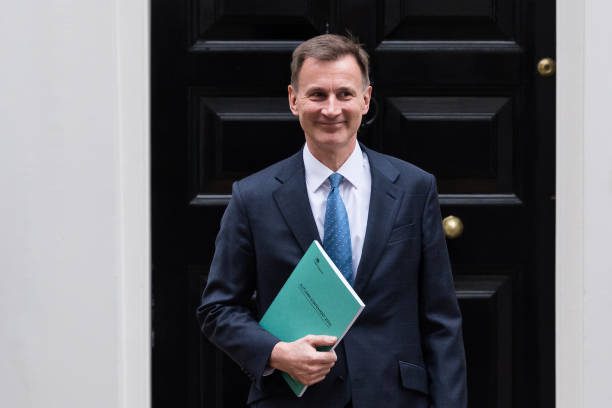
On Wednesday 22nd November, Jeremy Hunt MP unveiled his Autumn Statement, setting out the Government’s tax and spending commitments for the next year.  The backdrop to this year’s Autumn Statement presents a number of challenges for a government with likely less than a year until the next General Election. The UK’s inflation rate stands at 4.6%, more than double the Bank of England’s target of 2%. Growth rates have stalled, and the Bank of England is predicting that the UK will see zero growth until 2025.

To better understand the true impact of the decisions in the Autumn Statement and how they will impact both the wider economy, and specific sectors, GK Strategy have developed a briefing containing sector specific insight and analysis from our Senior and Strategic Advisers.

Find GK’s briefing here: Autumn Statement 2023

GK Point of View: The Circular Economy and its investment potential

With an increasing number of deals being conducted in this space, GK consultant Milo Boyd takes a look at the potential of the circular economy for investors.

The circular economy – a system of trade which aims to increase the efficiency of resource use and reduce environmental impact, while developing the wellbeing of individuals – is increasingly being looked upon as an area that warrants attention from investors, and it seems that the concept is here to stay. A 2021 report published by BDO showed that the concept has been attracting a growing amount of investments – more than £1.5bn of capital has been directed into the circular economy since 2018. Of this funding, 33% of the deals have been conducted in manufacturing and industrial sectors and a further 33% has been directed to the food and drink sector, giving an indication of the breadth of opportunities available for investors. The upward trend in investment would indicate that these opportunities are only going to become more numerous as the UK continues to march towards a more sustainable future, and increasing numbers of organisations place ESG at the front and centre of their business operations.

Fundamental to this shift is the growing understanding of the economic returns that the concept of a circular economy can achieve across a variety of industries, notwithstanding the more obvious environmental benefits. For example, 2021 research from the Ellen MacArthur Foundation and Material Economics found that an adoption of circular economy principles into a system that addresses material use, shifting the focus to retaining and reusing resources and reforming our food system, can help to tackle 45% of Co2 equivalent emissions around the world, and found that profitability of investments can be significantly increased compared with non-circular investments.

Finance has rightly begun to seize on these findings, and this is reflected in the overall trajectory of investment into the concept, as investors strike away from the ‘take-make-dispose’ and instead increasingly seek ‘circularity’ in investment decisions. The optimisation of the UK’s resources can be both economically stimulating and encourage the scale up of markets that support the UK’s net zero ambitions, whilst simultaneously producing high – and crucially less risky – returns for investors.

It is important that the Government provides the right environment to encourage these investments to continue. The installation of a new government brings the prospect of a political and regulatory reset, and with it a new direction of travel for policy. A particular point of focus is what approach new the Prime Minister will take. Liz Truss, a self-confessed fiscal Conservative who is keen to hit the ground running, has vowed to bring about the biggest change to the UK’s economic policy for decades. It remains to be seen how Liz Truss will approach environmental policy, aside from conflicting statements to boost the green economy whilst simultaneously supporting fracking.

The circular economy is an important feature of the Government’s environmental strategy, as has been made clear in the 25 Year Environment Plan published in 2018, and the more recently published Net Zero Strategy. But there has been scant indication of how the new Prime Minister intends to build on these strategies and how she hopes to maximise resource productivity, reduce waste of resources, and to encourage an acceleration in the circular economy’s development. This is where the financial sector needs to proactively respond and not shirk its responsibility – finance can and should be a key lever in maximising the circular economy’s potential. It should be in the sector’s immediate priorities to establish a working relationship with the Government to achieve the environmental and financial benefits that can set the UK on a path towards economic growth and environmental sustainability. This will be of vital importance if the Government and the UK’s finance sector are committed to maintaining the UK’s status as a global leader for finance and climate action.

GK Strategy are experts in helping organisations understand the changing political landscape, and strongly recommend that business leaders quickly meet with government to discuss their priorities. GK is well placed to support finance leaders looking to connect with relevant stakeholders, get in touch with milo@gkstrategy.com for more information.