Category Archives: Health

MH-webinar

5 takeaways from Sir Norman Lamb and Phil Hope’s ‘in conversation’ event on the future of mental health care

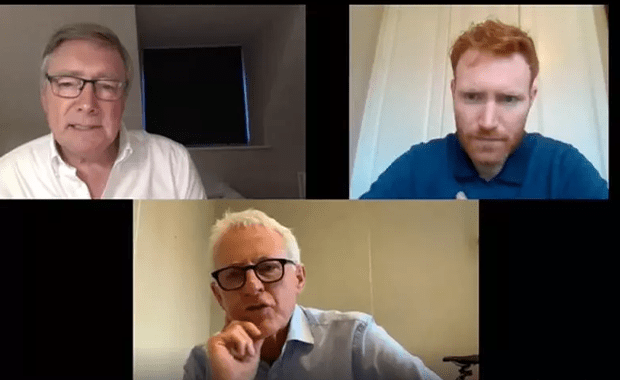
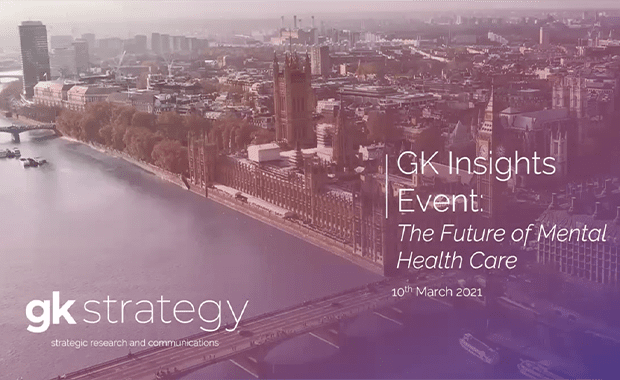
GK Strategy hosted a policy insights event on the future of mental health in the UK, hosted by former Care Minister and GK Adviser, Phil Hope, with Sir Norman Lamb, Chair of the South London and Maudsley NHS Foundation Trust and former Health Minister during the Coalition Government. 

In a watershed year for mental health policy, the discussion was wide-ranging and covered everything from the review of the Mental Health Act to the spending power of local authorities. Key issues to note from the discussion include:

  1. There is not yet parity of esteem between mental health and physical health services

While funding commitments in mental health have increased in recent years, it still does not receive the ‘parity of esteem’ that so many have been calling for and that the Government hopes to achieve.

Sir Norman Lamb was quick to highlight that waiting lists are still ‘shockingly high’, particularly for young people who can sometimes see waits of a year before receiving treatment. Moreover, facilities need upgrading and there are still systemic barriers to the way mental health is perceived which prevent reaching parity. The review of the Mental Health Act is one area this could be addressed, as current proposals are a step in the right direction.

  1. Workforce and skills shortages in mental health may prevent progress

Phil Hope highlighted that workforce and skills is ‘still a massive issue’, and Sir Norman Lamb recognised that quality recruitment in the independent and third sectors can be very difficult. Reform to the immigration points system was recognised as a route to improving international recruitment.

The need for investment in training was also highlighted as a necessity for upskilling staff. Recent investment announced by the government for training and expanding mental health teams in schools, to support children and young people, was welcomed.

  1. The shift from competition to collaboration poses both a threat and an opportunity

Due to the UK’s departure from the European Union, European procurement rules no longer apply to the UK. These rules required a robust, competitive process but the UK’s departure aligns with a move to collaboration rather than competition. Sir Norman Lamb expressed some concern that this lack of competitive process may lead to reduction in quality, as providers become less driven by the standards of their competitors. Both Sir Norman Lamb and Phil Hope agreed therefore that there needed to be other means of holding the system accountable.

Sir Norman Lamb highlighted the importance of provider collaboratives, as well as the new statutory setup of Integrated Care Systems (ICSs). Both speakers shared concerns that local boards held no decision-making powers and became simply ‘talking shops’. Sir Norman Lamb expressed his concern that the proposals for ICSs did not require the presence of a mental health voice at the table – this was optional as per the decisions of each board.

  1. The importance of capital investment and Treasury requirements

Both Phil Hope and Sir Norman Lamb recognised a ‘huge need’ for capital investment in learning disability and mental health facilities. Sir Norman Lamb stated that the quality of some facilities ‘is currently unconscionable’. There was recognition that capital funding limits (known as CDEL) imposed by the Treasury have led to massive constraints in this area.

It was suggested that this may open the door for public-private partnerships, because the private sector can make the investments for capital. It was suggested that controls in the NHS White Paper on capital expenditure decisions would be ‘a retrograde step’.

  1. The case for social care reform continues to mount

It was noted that reform of social care has been a talking point for a long time, but whether it will come soon neither Sir Norman Lamb nor Phil Hope could predict. Sir Norman Lamb recognised that the UK does not ‘spend enough as a society’ on social care, and that the ‘consequences are there for all to see’. Sir Norman Lamb said that he personally prefers a social insurance model for social care funding that protects younger working adults. The role of local authorities in mental health care was also discussed, and Sir Norman Lamb highlighted that new funding for mental health services cannot simply recategorize funding from other budgets, such as those for local authorities.

A recording of the event is available to view if you were unable to join us or would like to revisit

To discuss these issues further or if you have any questions related to mental health and social care policy, please do get in touch via ian@gkstrategy.com and we would be delighted to setup a call with you.

GK ADVISOR PHIL HOPE

GK Adviser Phil Hope In Conversation with Sir Norman Lamb on the future of mental health in the UK

On 10th March, GK Strategy hosted an ‘in conversation’ event on the future of mental health in the UK, hosted by former Care Minister and GK Adviser, Phil Hope, with Sir Norman Lamb, Chair of the South London and Maudsley NHS Foundation Trust and former Health Minister during the Coalition Government.

The discussion was wide-ranging and covered everything from the review of the Mental Health Act to the spending power of local authorities. However, for those who wish to recap the event or who were unfortunately unavailable to join us, you can watch the session back here:

We hope you found the event and this summary informative. We have distributed alongside this paper a link to a recording of the event if you were unable to join us. To discuss these issues further or if you have any questions related to the discussion, please do get in touch via ian@gkstrategy.com and we would be delighted to setup a call with you.

gk - government blueprint copy 2

What does the Government’s Healthcare Blueprint really mean for the NHS, independent providers and the care sector?

GK’s Strategic Advisors and former health ministers Alistair Burt and Phil Hope share their thoughts on the Department for Health & Social Care’s recent proposals for healthcare reform and integration and they explore what this means for investors and providers.

GK are experts in health and social care policy, working across the system with care providers and med tech and life sciences companies. We support investors to evaluate political, policy and regulatory risk in the investment process, and support independent providers and charities to engage and shape the political and policy landscape.

Download their analysis here: Healthcare Blueprint

For more information or to set up a meeting to discuss the health and care landscape further please contact robin@gkstrategy.com


gk - spending review

What the Spending Review means for Health and Social care

The recent Comprehensive Spending Review was the last of several fiscal injections for the health and care system in 2020 and there is much of relevance to organisations who depend on public health and care spending, especially in the wake of COVID-19. The GK team outline the key funding announcements, analyse what they mean in practice and highlight where further information is required

To read more, download your copy here: What the Spending Review means for Health & Social Care.

For any questions or to discuss the health & care political and policy landscape contact joecormack@gkstrategy.com

gk - health and social care insights

GK launches Health and Social Care Insights Report

We are delighted to launch GK’s new Health & Social Care Insights report which we will be producing every month.

Download your copy of the newsletter where GK’s expert consultants and advisors cover:

  • NHS Spending – a look forward
  • New risks and opportunities for private sector providers and investors
  • What does the end of the transition period mean for medicines and medical devices?
  • 2021 – finally, a new future for social care?
  • 2021: A Reset for NHS Digital Strategy?
  • What does the pandemic mean for the future of NHS dentistry?
  • Dividing line? Reassessing pharmacy funding

If you would like to discuss the health and landscape with our team contact Louise Allen at louise@gkstrategy.com

gk - Doing nothing is ‘no longer an option’

Doing nothing is ‘no longer an option’. With social care on the precipice, Boris Johnson urgently needs to outline a clear long-term vision.

By GK consultant and social care policy expert, Jack Sansum 

15 months have now passed since Boris Johnson stood outside Downing Street promising to “fix the crisis in social care once and for all”. While there have been numerous rumours emanating from Whitehall that plans are finally starting to take shape, concrete plans for reform have yet to be proposed.

As cases of COVID-19 rise and the Government scramble to gain a sense of control over the virus, now may not seem like the ideal moment for Johnson to think about the longer term. The pandemic has laid out in stark terms the need for social care reform, and as the UK enters a second wave of COVID-19 infections, it is essential that the Government finally sets out a clear long-term vision to deliver care both during and after the crisis.

Promises, promises…

The starting point of all discussions concerns the quality of the delivery of care and the system. The government wants to improve the quality of care, while generating greater stability and capacity within the system by encouraging more providers into the market. The co-ordination of provision between the NHS and social care is central, with Greater Manchester – where resources are pooled – seen as a model of best practice for the rest of the country.

While there is agreement on a number of key issues, there is growing frustration at government inaction from within the social care sector, and heightened calls for a long-term strategy. Care England Chief Executive Prof Martin Green has been particularly vocal on the issue. During a recent evidence session of the Health and Social Care Committee’s workforce burnout and resilience inquiry, Green outlined to MPs that there had been ‘endless’ discussions about integration but a lack of vision.

Green’s calls have also been echoed by Ian Trenholm, Chief Executive of the Care Quality Commission, and the Health and Social Care Select Committee, who have urged the government to provide an emergency boost of £7 billion a year to prevent the system from collapse as the pandemic pushes the sector towards a funding crisis.

The ‘magic of averages’

For social care, the past 20 years have seen a plethora of promises but ultimately inaction in policy terms. By contrast, NHS spending and output has grown more quickly than the population. Without long-term planning, health and policy will continue to lack coherence.

The funding mechanism will be crucial in underpinning a long-term plan for social care. While addressing the recent Conservative Party Conference, Johnson outlined a plan to bring “the magic of averages to the rescue of millions”, causing many to infer he was considering a National Insurance style system to pay for the costs of care.

It has also been reported that Ministers have considered a personal cap on care costs and the introduction on a specific social care tax. The government is also said to be considering revisiting the 2011 Dilnot report which suggested there should be a cap on the amount which anyone should pay for their care in their lifetime, fixing the figure between £25,000 and £50,000.

A clear vision?

COVID-19 has elevated social care reform into an urgent policy priority for the Government. New policy and legislative proposals are likely to be examined by a new health and social care taskforce and DHSC, providing significant scope for social care providers to shape the structure and mechanisms of the plans.

To engage with the Government’s plans for reform effectively, organisations will need to understand the wider direction of health and social care policy. Health and social care is GK Strategy’s largest policy area and we are experts at supporting organisations who are operating in highly regulated sectors and helping them to navigate complex markets and build relationships with key decision makers.

For more information or if you would like to speak to the GK team, please contact Jack Sansum at jack@gkstrategy.com