Category Archives: Defence

Cleared for take-off? The policies shaping the UK drone industry

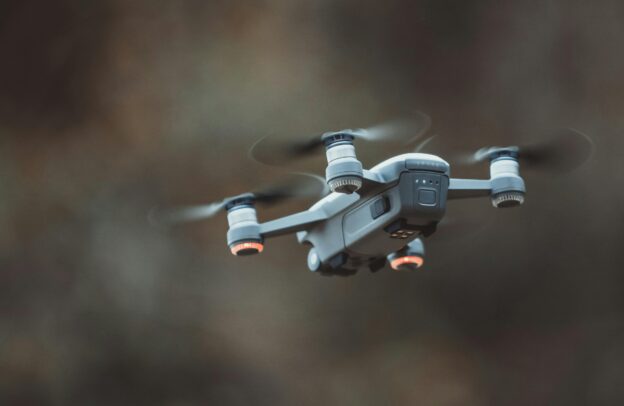
The government has set itself the ambitious goal for becoming the fastest growing economy in the G7. This lofty ambition sits at the heart of the government’s agenda and is central to its industrial strategy – a 10-year plan to increase business investment in the industries of the future. The drones sector has been identified as a frontier industry, with the government clearing a flightpath for the UK to be a world leader in drone innovation and technologies.

Driving this move is the extraordinary economic potential of drones. A recent PwC report states that the sector could contribute £45 billion to the UK economy and support 650,000 jobs by 2030. Further analysis undertaken by Frazer-Nash consultancy for the government suggests that with public support and a shared strategy and ambition between government and industry, the sector could have contributed £103 billion by 2050. Together, these findings demonstrate how collaboration between government and industry can lead to a thriving drones sector which can drive growth and innovation across the UK.

Regulatory challenges

For this growth to be unlocked, the government must work to address regulatory challenges that constrain innovation. Across government, companies face a range of overlapping rules that can slow commercial deployment and limit investment. One of the largest constraints on the sector is the requirement to keep the drone within the line of sight of the operator. Additional health and safety regulations enforced by the Civil Aviation Authority (CAA) also prohibit drones being flown within a 50m radius of people. This constrains the range of operations drones can perform, limiting their use in many areas such as delivery, infrastructure inspection, and large-scale surveying, particularly in urban areas.

The Health and Safety Executive (HSE) also limits the growth of drones operating in the agricultural sector, with the HSE requiring companies to get approval for almost all aerial spraying. The HSE states that there is a 52-week processing time for drone applications, which will inevitably undermine the innovation and adoption of drones in the agricultural sector.

All these affected areas are where drone technology offers incredible commercial potential, so overcoming these regulatory barriers will be key for businesses looking to unlock growth in the drones sector.

These challenges are not insurmountable and government and industry collaboration is already underway to tackle them. The Regulatory Innovation Office (RIO) is leading a series of pro-innovation reforms for the drones sector, including the introduction of a single, standard risk assessment process to cut approval times for complex drone operations. They are also working on expanding the CAA’s atypical air environment policy, which enables the use of drones Beyond Visual Line of Sight (BVLOS), with the ROI providing £8.9 million in funding for innovative projects that will test the effects of new BVLOS standards. The ROI has also worked with the HSE to make it legal for drones to spray slug pellets, which is a major step forward for agricultural drones businesses.

Public concerns

Drones businesses also face challenges of public perception. The research done by Frazer-Nash consultancy estimated that without public support, the size of the sector will be £65 billion by 2050. That represents a £38 billion reduction in the sector compared to the scenario with public support. Given the incredible economic value that lies in public support, addressing public concerns, such as the use of drones for criminal activities, are of great importance to the sector and government to ensure businesses reach their full potential.

The government is already thinking about innovative solutions to the public perception challenge. In November 2025, the government launched a technology challenge which will encourage industry to develop innovative systems capable of detecting drones designed by criminals to evade current detection methods. If successful, this challenge will help the government intercept drugs being delivered by drones into prisons.

The government’s willingness to cut red tape and find innovative solutions to the challenges facing the sector creates opportunity for the sector. However, it remains essential for companies to engage with the government, both to push further on reducing overly prohibitive regulation and to address public concerns surrounding drone safety. By doing so, businesses can play a central role in shaping a regulatory landscape that supports innovation, builds public trust, and cements the UK’s position as a global leader in drone technology.

If you’d like to discuss drones and the wider political landscape in more detail, please reach out to Jacob on Jacob.walsh@gkstrategy.com


To go boldly: UK Strategic Defence Review 2025

The UK Government has now published its long-awaited Strategic Defence Review (SDR). Speaking at a BAE Systems shipyard on the Clyde, the Prime Minister said the UK military is moving to ‘war-fighting readiness’ and, in step with the wider growth agenda, Sir Keir emphasised a role for the whole country in this new defence enterprise.

This review differs significantly from previous strategic defence (and security) reviews, and its output will be followed closely by allied capitals. It has the potential to be a transformational blueprint, with offensive cyber, technology and autonomy at its centre, to face the ‘new era of threat’.

The SDR was led by the respected former Labour Secretary of State for Defence and past NATO chief Lord Robertson, with an extended external team including Dr Fiona Hill and General Sir Richard Barrons. Commissioned soon after Labour returned to government in July last year, it is the UK’s first externally led defence review. Its aim is to make a forward-looking assessment of the UK’s strategic defence interests and outline the corresponding military requirements. This is no easy ask in such a fast-changing world, which is in part why we also see the early confirmation of big-ticket commitments, including new hunter-killer submarines, a £15 billion nuclear warhead programme to equip the bomber boats, and new long-range weapons.

In the strategic context, the review is clear that both Russia and China are big state threats. It also highlights the growing role the digital world will play in the global defence and security landscape, and the review is the first of its type to put a significant focus on cyber capabilities.

The balance here is between resource and the review’s four lenses: NATO-first; global responsibilities; homeland defence; and hybrid grey-zone activity such as cyber-attacks. Artificial intelligence and drones are transforming modern warfare, so the government has committed to set up a new cyber command with a £1 billion package of investment. There is also good news for MBDA and BAE who will be in line for the new ‘defence factories’ as the UK gets serious about munition supplies, with a £1.5 billion commitment to establish at least six munitions’ facilities.

The Ministry of Defence is still experiencing challenges to frontline budgets and decisions in the government’s upcoming spending review, due to be announced on Wednesday 11 June, will demonstrate No.10 and No.11’s seriousness about putting the SDR’s findings into action.

Friends and adversaries alike will keep a close eye on whether this latest SDR will deliver for UK defence. In the near term, all of us involved in defence and security await the publication of the government’s industrial strategy, expected alongside next week’s spending review, and the many opportunities it will bring to engage with government in the weeks and months ahead.

Will Trump derail Starmer’s policy plans?

GK Associate Josh Owolabi shares his thoughts on the impact of a second Trump presidency on the government’s policy agenda.

Messaging from the Starmer government since Trump’s election victory has focused on projecting calmness. The government believes that it has done its ‘homework’ on Trump and that both countries will prosper while Trump is in office. However, Trump’s unpredictability was a key characteristic of his first presidency. His penchant for breaking – or threatening to break – norms is well established and will induce anxiety within Downing Street. Trump does not do ‘orthodox’ and, in contrast to his first term, now has the full support of the Republican Party to make radical policy changes that could impact the UK economy and the Starmer government’s delivery of its policy agenda.

Trump’s view on the use of tariffs symbolises his unorthodox approach. He has proposed a 60% tariff on imports from China and up to 20% on goods imported from other countries as part of his ‘America First’ strategy. Economists and research institutes across the United States have criticised the plan, arguing that it is counterproductive as it would make goods more expensive for American consumers. This would also be problematic for the Starmer government as the US is the biggest market for high value goods from the UK, including pharmaceuticals, automotive parts, and medical products, and would likely impact pricing for goods in these industries.

The National Institute of Economic and Social Research (NIESR) has argued that the imposition of even a 10% tariff would be damaging for the UK, reducing GDP growth by 0.7% in 2025. Given the fiscal climate, the government can ill-afford a reduction in growth if it plans to deliver on its pledges to improve access to healthcare and education (including a major expansion of early years entitlement in 2025).

Although Trump’s ‘trade war’ rhetoric is focused on China and the EU which could mean avoiding the full 20% tariff on exported goods, the UK is unlikely to receive special treatment. While Trump spoke of a UK-US trade deal during his first term, which would likely remove any tariffs, it is unrealistic to expect progress on a deal any time soon. The US has demanded the lowering of regulatory standards on American agricultural imports, such as ‘chlorinated chicken’, which has been a red line for previous governments.

The Starmer government is unlikely to budge on this issue given that the public does not support the lowering of food standards to secure a trade deal. Stephen Moore, a former economic adviser to Trump, has said that the UK must embrace the US economic model and move away from Europe’s “socialist” system, if it wants to agree a trade deal with the US. The Prime Minister has categorically rejected this view. During a speech at the Lord Mayor’s Banquet, he argued that his government does not need to choose between the US or the EU. Instead, Keir Starmer plans to forge closer economic ties with both. However, implementing this strategy will be incredibly difficult if Trump picks a fight with the EU and demands that trade with China is reduced.

Trump’s isolationist instincts will also cause concern. The government’s pledge to raise defence spending to 2.5% of GDP to support the Ukrainian war effort will therefore come under heavy scrutiny. Trump has long expressed frustration with the US’ allies for allowing their defence spending to fall after the Cold War ended, feeling that the US has been left to pick up the bill. Will the new Trump administration be satisfied that the UK is committed to reducing the overreliance on the United States? If not, the Starmer government may need to prioritise defence spending which would limit the government’s room to manoeuvre as it has just raised taxes by £40bn and still remains only just within its fiscal rules. Increased defence spending will make it harder for the government to spend more elsewhere, and get ailing public services back ‘on track’ or make investments that help it to grow the economy.

Helicopter over the dessert

Will Sunak’s Latest Reset Work?

GK Associate Hugo Tuckett examines the Prime Minister’s recent speech at Policy Exchange and whether he can address the Conservative Party’s declining fortunes.

Rishi Sunak turns his attention to security in bid to tackle Labour’s poll lead.

Following a dismal set of local election results and the high-profile defection of Dover MP Natalie Elphicke to Labour, Prime Minister Rishi Sunak has attempted to reset the political agenda. He used his latest relaunch at Policy Exchange, a Conservative-friendly think tank, to portray himself as the best leader to guide the country through what he described as the “dangerous and transformational” years ahead.

References were made throughout to ensuring the UK’s security in the wake of the Russian invasion of Ukraine and the ongoing conflict in the Middle East. It was also telling that Sunak made a pitch to voters on the opportunities presented by artificial intelligence – an area where he will feel comfortable promoting his tech credentials against the Labour leader Keir Starmer, who is 17 years his senior.

It is not unusual for incumbent (and unpopular) governments to paint opposition parties as inexperienced and incapable at a time of potential national peril. Former Prime Minister Gordon Brown famously argued “this is no time for a novice” in the wake of the 2008 financial crash amid David Cameron’s growing popularity. However, to go for this tactic right at the start of a general election campaign does suggest Sunak’s No.10 operation is running out of levers to pull to tackle Starmer’s seemingly unassailable lead in the polls.

Sunak’s pivot into security marks a clear distinction from his previous attempts to put the Conservatives on the path to election victory. At the 2023 Conservative Party Conference, he tried to paint himself as the change candidate and separate himself from the then 13 years of Conservative rule. Sunak was subsequently forced to adopt a continuity-focused strategy and defend the Conservatives’ record in office following David Cameron’s return as Foreign Secretary later that year.

The extent to which Sunak’s latest reset will work will depend on whether the electorate is still listening. The Conservative Party can highlight its commitment to raise defence spending to 2.5% of GDP by 2030, a pledge yet to be matched by Labour, who have adopted the looser definition of meeting the 2.5% figure “as soon as resources allow.” However, with Labour so far ahead in the polls and three changes of tack in less than a year, it does raise the prospect that the Prime Minister is trying to engage an electorate which is simply no longer interested in what the Conservatives have to offer.

Helicopters

Underfunded & Underprepared: Is Britain’s Defence Broken?

GK Adviser Felix Griffin dives into the challenges facing the MoD, from funding shortfalls to sluggish decision-making, and explores potential paths forward.

Incoherent strategy and a lack of funding is hampering progress

The UK’s Ministry of Defence finds itself grappling with a yawning funding gap, a rapidly evolving global landscape demanding a more responsive military, and an uncertain political landscape.

The biggest hurdle? Money – not just the lack of it but also how its spent.

Having fallen down the pecking order in the Chancellor’s recent budget, defence spending is set to receive no additional funding under the current government’s remaining tenure.

Meanwhile rising costs, particularly in nuclear deterrence and ambitious naval programmes, have created a staggering £16.9 billion hole in the MoD’s Equipment Plan – a shortfall which effectively handcuffs the MoD’s ability to modernise its equipment and carry out crucial projects necessary to maintain a robust defence posture.

There’s more to this than just money. Recent warnings highlight long-standing and systemic inventory failures in all three categories of inventory across the UK armed forces: Capital Spares, Raw Material and Consumables, and Guided Weapons, Missiles and Bombs. This raises a critical question: even with increased funding, would the UK be able to effectively equip its armed forces? The current evidence suggests not, presenting a deeper problem that needs addressing.

These issues point not only to a lack of innovation in procurement and strategic thinking, but also to sluggish decision-making processes that hinder the MoD’s ability to react swiftly to emerging threats.

Defence Secretary Grant Shapps’s stark assessment of the current situation – a transition from a “post-war world into a pre-war world” – rings all too true. The war in Ukraine serves as a stark reminder of the impact of large-scale conflict in Europe, while regional instability in the Middle East and the ever-growing tensions in the Asia-Pacific all demand a more agile and capable military from the UK. These diverse threats, which are by no means an exhaustive list, require a comprehensive and adaptable defence strategy from the MoD; something which the most recent Integrated Review (2021) failed to deliver, even after it was refreshed in 2023.

With the possibility of a new Labour government becoming increasingly likely, the party’s stance on defence policy and spending adds another layer of uncertainty.

I attended a Policy Exchange event on 28 February, which saw Labour’s Shadow Secretary of State for Defence, John Healey, articulate his party’s vision for national defence. While recognising outdated practices and the imperative to modernise, Labour’s defence plans appear largely underdeveloped, or at least under-communicated.

Despite outlining some interesting plans, including a new national armaments director and the enhancement of the Chief of Defence Staff’s role, Healey’s speech fell victim to his party’s commitment to fiscal prudence, lacking significant substance and ambition. Though highlighting the state of defence when Labour left in 2010, with comparatively higher levels of defence spending (2.5% of GDP), as well as better troop numbers and satisfaction (over 100,000 soldiers and 60% approval), Healey emphasised the need to streamline existing processes before making financial commitments, underscoring a cautious approach. Nevertheless, Labour’s emphasis on reform and strategic preparedness offers a glimpse into their aspirations for bolstering the nation’s security in an increasingly uncertain world.

Silouhette of soldier

Artificial Intelligence: ‘The Future of Defence Capability’